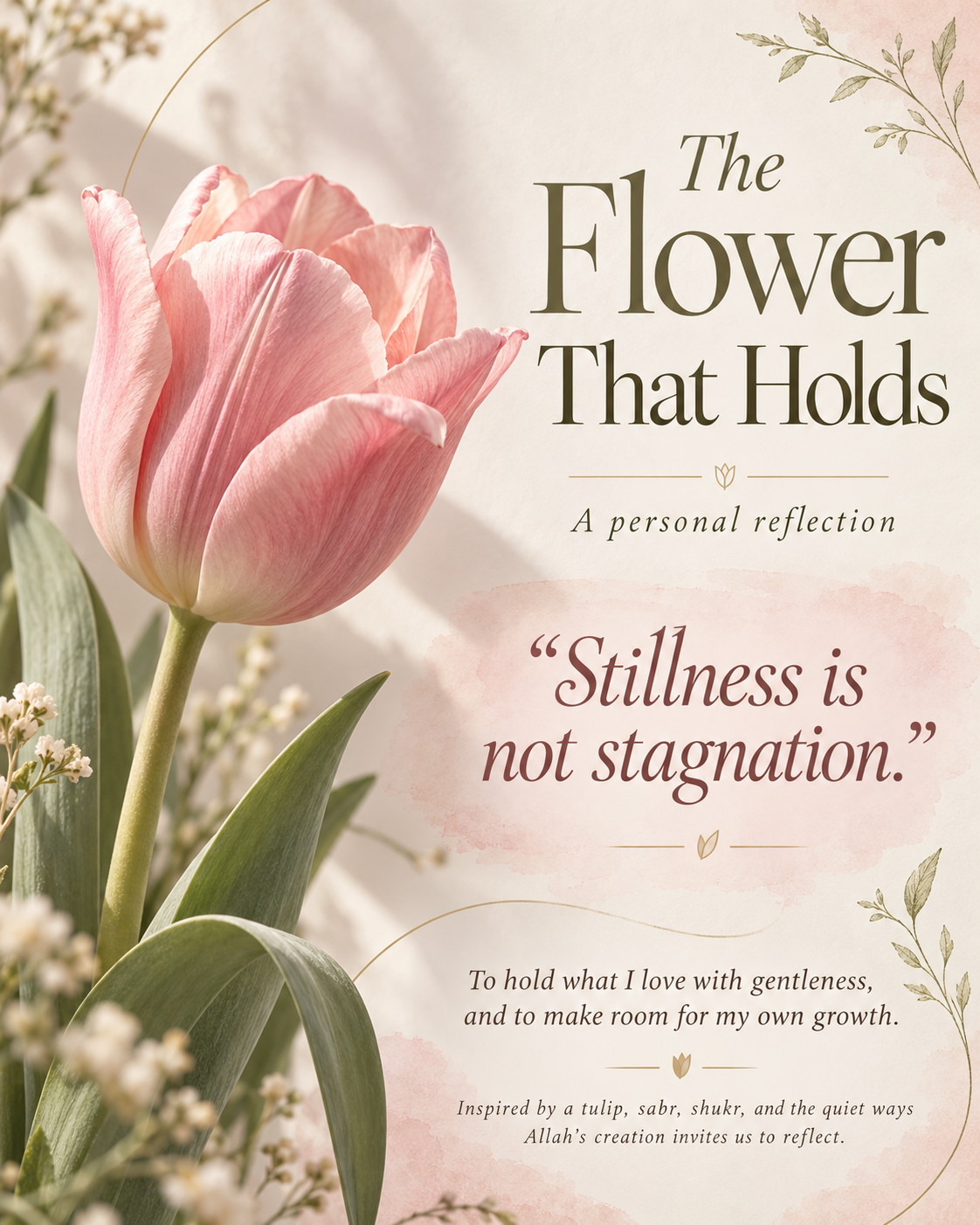
The Flower That Holds
A personal reflection · 5 min read
By Farah Saleem Kalsekar ·
I have always loved tulips.
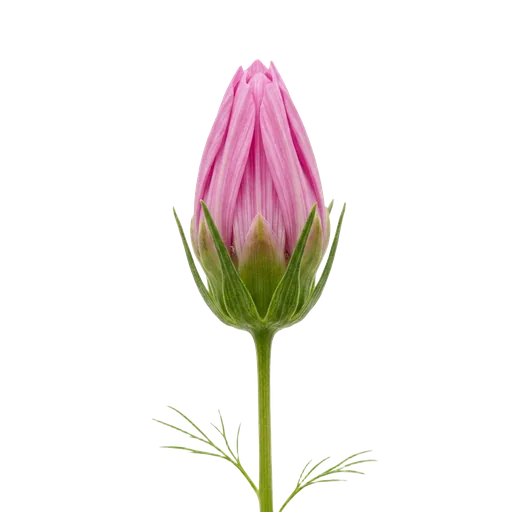
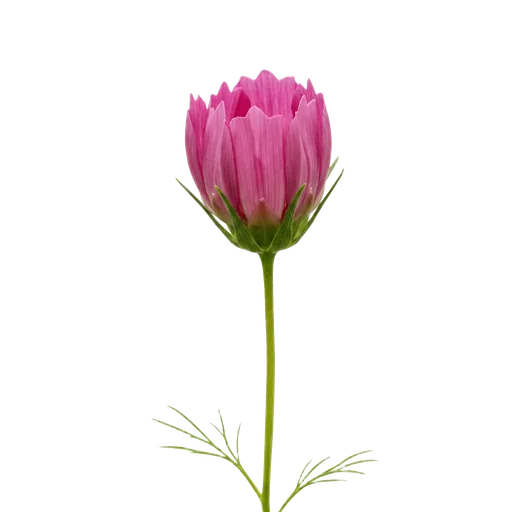
Something about their shape draws me in. Their petals curve gently inward, as though embracing something precious and protecting it from the world outside. I never questioned why I loved them. I simply did.
Recently, that flower became part of a reflection I hadn’t expected.
It began at a workshop called Bloom in His Remembrance. So much of my time is spent studying, coaching, and facilitating for others that I’ve come to value sitting on the other side, becoming a student again. However much we learn, there is always a lesson waiting to find us. Sometimes it arrives in the simplest way.
Each of us was given a flower. The facilitator had researched their natural characteristics and written reflections linking them to patience, gratitude, and growth. We weren’t told why a particular flower had been chosen for us, yet many of us found something of ourselves in the words we received.
Mine was a tulip.
I smiled. Then I began reading.
Tulips spend much of their growth hidden beneath the soil. The cold season plays an essential part in their development, long before anything appears above ground. And then one sentence stopped me:
“Stillness is not stagnation.”
I began thinking about the seasons of our own lives when we appear to be standing still.
When we are doing our best, fulfilling responsibilities, caring for those around us, trying to make sense of situations, yet wondering whether anything is really changing.
Sometimes, we become so accustomed to measuring growth through visible achievements that we overlook the quieter changes taking place within us.
The understanding that comes after years of experience.
The courage to question something we once accepted without hesitation.
The ability to recognise an old pattern before falling into it again.
And sometimes, the simple but difficult realisation that we may need to approach life differently.
That brought me to sabr. For much of my life, patience meant enduring, staying composed, and continuing to give. There is strength in that. But I’ve come to understand that sabr is sometimes the pause before a response, or the courage to have a conversation we’ve been avoiding.
The Qur’an gives us a picture of this in Ya’qub (AS). He met his loss with ṣabrun jamīl, a beautiful patience, and yet he also said, “I only complain of my suffering and my grief to Allah” (Yusuf 12:86). His beautiful patience did not mean the absence of grief. He felt it deeply, yet turned to Allah with his sorrow.
Gratitude works the same way. Alhamdulillah, there is so much to be thankful for. But shukr doesn’t ask us to deny what hurts. We can love someone and still feel disappointed. We can say Alhamdulillah with a heart that is also trying to make sense of something difficult. Gratitude and sadness often sit quietly side by side.
Still, it was the tulip’s shape I kept returning to: those petals curving towards one another, holding something tender within.
I thought about everything we hold through life. The relationships we treasure, the responsibilities we carry, the expectations we work hard to meet, and often the emotions of the people we love.
Nurturing, listening, and creating spaces where others feel safe is something I value deeply, at home and in my work. But life teaches us, sometimes gently and sometimes painfully, that even our most beautiful qualities need wisdom. Somewhere between caring and constantly adjusting, we can forget that we are part of the relationship too. Our feelings matter. Our needs deserve consideration.
So I found myself asking a question I hadn’t expected to ask that day:
When we spend so much of our lives holding space for others, who holds space for us?
I don’t ask it with resentment, and I wouldn’t want to lose the part of me that cares deeply. But the heart that offers so much warmth to others needs warmth of its own. The one who listens also needs to be heard. Protecting our own peace is not the same as loving less. It is learning to love with greater awareness.
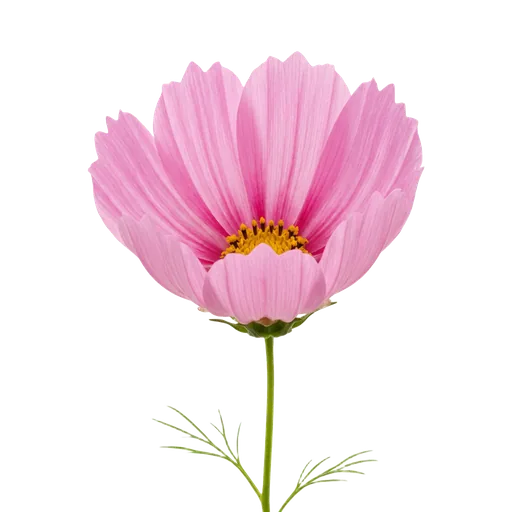
Later, I learned something about tulips I hadn’t known. Their petals respond to warmth and light, opening in the sun and drawing together again as the air cools or night falls. There is something in that worth sitting with: knowing when to open ourselves to others, and when to give ourselves space.
None of this was planned. I hadn’t gone to that workshop looking for answers about myself. The facilitator simply created a thoughtful experience, and it opened a conversation within me she could never have anticipated. That is one of the beautiful things about learning. We never know which word will reach a part of us that has been waiting to be understood. Sometimes we hear something familiar, and it lands differently because we are different.
I walked in as someone who spends her life helping others grow. I walked out reminded of how much I still have to discover about people, about myself, and about the quiet ways Allah’s creation invites us to reflect.
I had always loved the tulip for the way it holds.
That day, I discovered something about the way it grows.
Somewhere between the two, I’m still learning to do both: to hold what I love with gentleness, and to make room for my own growth.